
Profile ideas, conversation prompts and practical safety reminders for adults.
Meet people with room for a real conversation
Tinely is built around a simple idea: a promising connection begins when two people have enough context to notice one another. A profile gives you a place to introduce yourself, show what matters to you and make the first exchange less random. The experience is meant for adults who want to meet people online without turning every introduction into a performance.
The official service describes its purpose as helping like-minded people build lasting connections. That focus matters because shared goals can make an opening message easier. A common interest, a familiar kind of weekend or a similar outlook gives both people something concrete to discuss.
Distance and age can shape how people meet, yet neither one tells the whole story. Tinely presents online discovery as a way to look beyond the limits of a usual social circle. You can pay attention to personality, intentions and the details someone chooses to share before deciding whether to start a conversation.
Start with a profile that sounds like you
Your profile is the first part of the conversation. A clear introduction works better than a catalogue of perfect traits. Write a few lines about how you actually spend your time, what makes you curious and the kind of connection you hope to find. Specific details give another person a natural reason to respond.
A useful profile can be warm without revealing private information. Mention an interest you would enjoy sharing or a small routine that says something about your character. There is no need to publish a home address, workplace schedule, financial information or anything else that belongs in a private exchange.
Choose photos that are recent and easy to understand. A clear portrait helps people recognise you while another image can show a hobby or setting that feels genuine. Avoid crowded pictures that leave visitors guessing which person owns the profile.
Give your introduction a useful hook
A sentence such as “I never miss a Sunday walk by the water” offers more to work with than a list of adjectives. It invites a question and gives the other person a glimpse of your pace. The best hooks are true, uncomplicated and easy to discuss.
You do not need to explain your whole life at once. Leave space for discovery. A profile should open a door rather than complete every future conversation before it begins.
Notice the details behind a match
Attraction may catch your attention first, but profile details help you decide what to do next. Look for signs of compatible expectations. One person may want a steady relationship while another is simply open to meeting someone interesting. Respecting those differences saves time and keeps the exchange honest.
Shared interests are useful, though complete similarity is not required. Curiosity about a different hobby can be just as engaging as an identical one. The important question is whether both people show interest and make room for each other in the conversation.
Read the whole introduction before sending a message. Referencing one real detail shows that the message was meant for that person. It also moves the exchange away from generic greetings that are difficult to answer.
Make the first message easy to answer
A strong opening is short, personal and relaxed. Mention something from the profile then ask one open question. “Your coastal photos look peaceful. Which place would you visit again?” gives the recipient a clear starting point without asking for a long explanation.
Avoid sending the same compliment to everyone. Personal remarks should stay respectful and should not focus only on someone’s body. Comment on an activity, a place, a book or an idea when possible. Those topics help establish whether a conversation has substance.
One thoughtful message is enough. People may not be online at the same time and they may choose not to reply. Repeated messages do not create interest. Give the other person space and direct your attention toward exchanges where effort is mutual.
Keep the rhythm natural
Good conversation does not require instant replies. Answer when you have something to say and ask questions that follow naturally from the previous message. Balance curiosity with your own stories so the exchange does not feel like an interview.
Humour can make an introduction feel lighter, but it works best when it is kind and easy to understand. Sarcasm is often hard to read without tone of voice. When in doubt, choose warmth over a joke that could sound dismissive.
Look for reciprocity
A connection develops when both people participate. Notice whether the other person asks questions, responds to what you share and respects the pace of the exchange. Mutual effort is more informative than a perfect opening line.
Interest can grow slowly. Some people write at length from the start while others become more expressive after trust develops. There is no single correct tempo, but silence, pressure or repeated boundary testing are clear reasons to step back.
You are allowed to end a conversation that does not feel right. A brief and polite message can close an exchange when circumstances change. You do not owe personal details or a debate about your decision.
Move from messages at your own pace
Online conversation can help you decide whether you would like a voice call, a video chat or a meeting. Move forward only when both people are comfortable. A call can add tone and spontaneity, while a short video conversation can confirm that expectations are aligned before meeting in person.
Do not let another person rush you into leaving the platform or sharing a phone number. Pressure is not proof of enthusiasm. A respectful match accepts that trust takes time and that each person can choose how to communicate.
Keep early conversations focused on getting acquainted. Requests for money, investments, gift cards, bank details or urgent financial help do not belong in a new romantic exchange. Stop contact if someone tries to turn attention into a financial obligation.
Plan a comfortable first meeting
If you decide to meet, choose a public place that is easy for both people to reach and leave. A café, museum or busy park can keep the first meeting simple. Arrange your own transport and tell a trusted person where you will be.
A first meeting does not need an elaborate programme. A shorter plan reduces pressure and leaves room to extend the time if both people are enjoying it. Keep expectations realistic: the aim is to see how the online conversation feels in person.
Personal boundaries remain important throughout the meeting. Consent is specific and can change at any time. Pay attention to words and behaviour rather than assuming that an earlier message guarantees anything in person.
Protect the information that belongs to you
Use the service with the same care you would bring to any new online introduction. Keep passwords unique and do not send sign-in codes to another person. Be cautious when a link asks you to enter account details outside the expected service.
Photos and messages can reveal more than intended. Check backgrounds for documents, addresses or location clues before posting. Consider what you would be comfortable sharing with someone you have only just met.
If an exchange becomes threatening, manipulative or deceptive, stop engaging. Preserve useful evidence and use the reporting options available to you. Immediate danger should be handled through the appropriate local emergency services.
Be clear about age and access
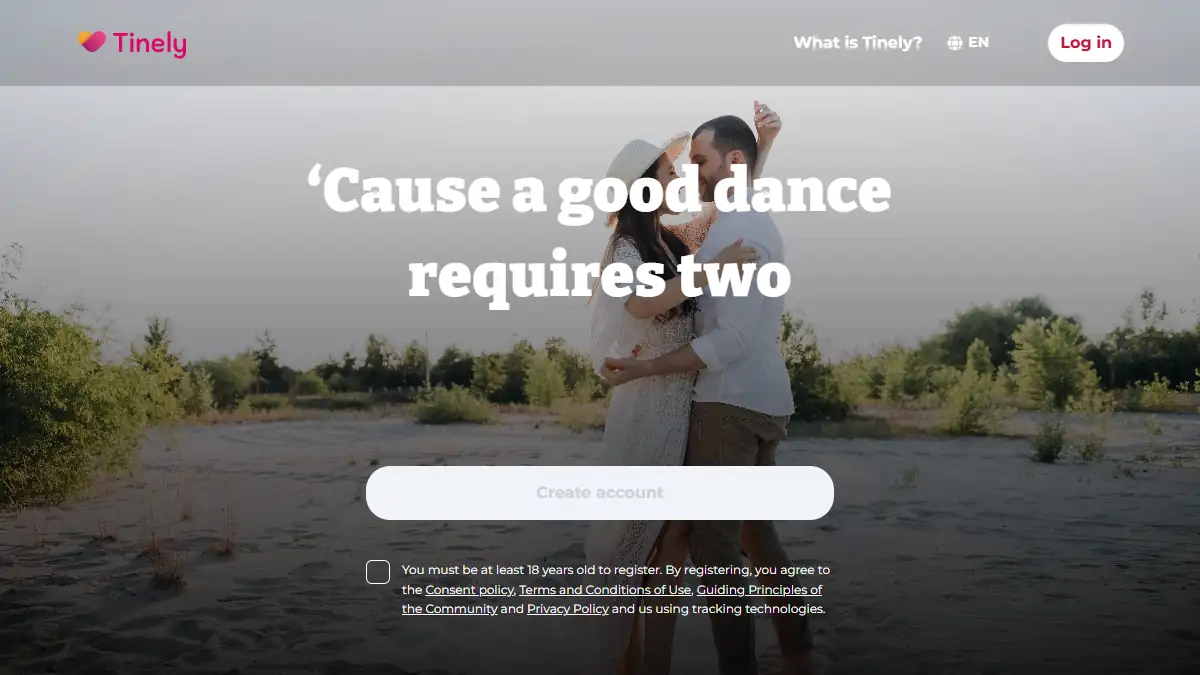
Tinely states that registration is for people who are at least 18 years old. Adults should still review the current terms and policies shown during registration because access conditions can vary by location and can change over time.
Creating an account involves agreeing to the policies presented by the service. Read those documents rather than treating the consent step as a formality. They explain the rules that govern use of the platform and the handling of account activity.
A dating profile represents a real person, so honesty matters. Use your own identity and current information. Do not impersonate someone else or present another person’s photographs as your own.
Build conversations around shared intent
A useful match is not defined only by proximity. It also depends on timing, expectations and the willingness to communicate. Say what you are looking for in language that leaves room for another person to answer honestly.
Compatibility may reveal itself through ordinary details: how someone spends a quiet evening, the way they handle disagreement or what they hope to make time for next year. These subjects often say more than polished declarations.
Tinely gives adults a starting point for those discoveries. The platform cannot decide whether two people fit, but a complete profile and a considerate first message can make the decision more informed.
Take the next step when it feels mutual
Begin by creating a profile that is recognisably yours. Browse with attention, respond with respect and let each exchange develop at a pace that suits both people. Meaningful connections are not guaranteed, yet thoughtful participation gives them a better place to begin.
The most useful approach is also the simplest: stay curious, protect your boundaries and notice whether interest is returned. When two people bring the same care to the conversation, an online introduction can become something worth exploring.
Continue only when the service and its current terms suit you.